
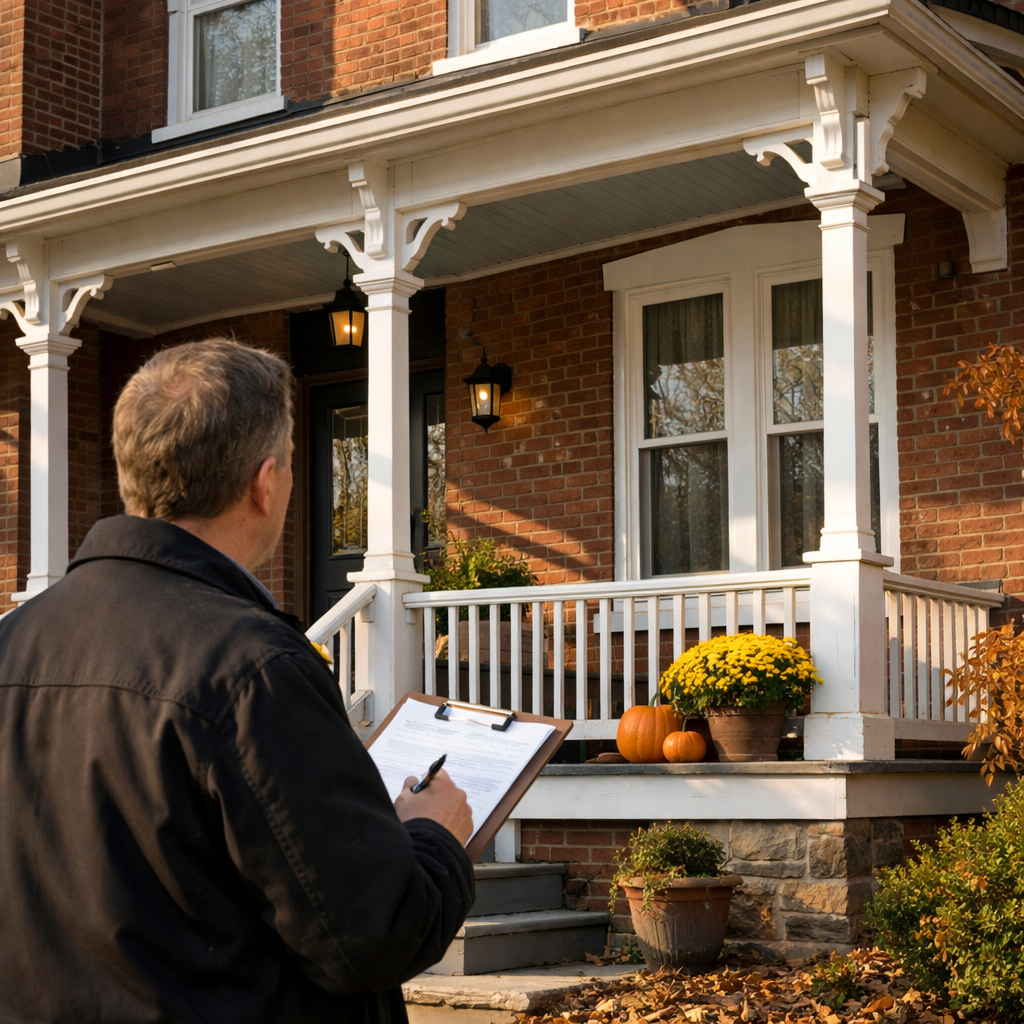
The short answer: An FHA appraisal does two jobs at once. It gives the lender an independent opinion of the home’s market value, and it checks that the house meets HUD’s Minimum Property Requirements, which say every FHA-insured home must be “safe, sound, and secure.” If the appraiser sees something that fails those standards, the report lists the repair and an estimated cost to fix it, and the lender decides what has to be done before the loan can close.
In older homes like Philadelphia rowhomes, Main Line twins, and Delaware County colonials, that second job is where most surprises come from. Here’s what gets checked, what gets flagged, and how to get ready.
What does the FHA appraiser actually look at?
The rules come from HUD’s FHA Single Family Housing Policy Handbook 4000.1, the rulebook every FHA lender and appraiser follows. During the visit, the appraiser checks:
- Roof. The roof covering has to keep moisture out and have at least two years of remaining life. If it looks like it has less, the appraiser must call for an inspection by a professional roofer.
- Heating. The permanent heating system has to heat the living areas to at least 50°F automatically, be safe to run, and use a fuel that’s readily available locally. Central air isn’t required, but if the house has it, it should work.
- Electrical. No visible frayed or exposed wiring, including in the basement and garage. The appraiser tries a sample of switches, lights, and outlets and notes whether the panel and amperage look adequate for the house.
- Plumbing and hot water. The appraiser flushes toilets, runs faucets for pressure and hot and cold water, and looks for leaks under fixtures. The water heater needs a temperature and pressure-relief valve with a discharge pipe.
- Water and sewer. Public water and sewer where feasible. Wells and septic systems have their own rules.
- Foundation and basement. The appraiser looks for visible structural problems and dampness. A sump pump, if there is one, has to work.
- Attic and crawl space. The appraiser looks inside wherever it’s safely accessible and reports signs of water stains, poor ventilation, or mold.
- Paint. For homes built before 1978, the appraiser must note all defective paint (cracking, scaling, chipping, peeling, or loose) on interior and exterior surfaces, including stairs, porches, railings, windows, doors, fences, and detached garages. All of it must be repaired under HUD’s lead-based paint rules.
- Access. The property needs safe pedestrian access and all-weather vehicle access from a public street, or from a private street protected by a recorded easement.
- Termites and hazards. Signs of wood-destroying insects mean a pest inspection. Known safety hazards must be reported.
Then comes the valuation itself: comparable sales, condition, and market analysis.
What are the most common repair flags in older Main Line and Philadelphia homes?
These are the patterns we see most in our area:
- Peeling paint on pre-1978 homes. The big one. Porch ceilings, window sills, railings, basement stairs, and garage trim all count.
- Aging roofs. Flat rowhome roofs and porch roofs often come up when remaining life is in doubt.
- Older electrical. Exposed or frayed wiring in basements and garages, or missing cover plates.
- Water heater details. A relief valve with no discharge pipe is a small but common flag.
- Damp basements. Older stone and block foundations can show active water, and a dead sump pump must be fixed.
- Utilities off in vacant or estate homes. If the systems can’t be run, the appraisal is made subject to a second visit, which can turn up more repairs.
- Rear access in attached homes. You must be able to reach the rear yard without passing through another living unit. For rowhomes and twins, an alley, easement, common area, or the home itself works.
What usually doesn’t get flagged: cosmetic wear. HUD’s examples of non-required repairs include holes in window screens, cracked window glass, a dripping faucet, defective interior paint in post-1978 homes, and a missing handrail that doesn’t pose a safety threat. And something that still works shouldn’t be replaced just because it’s old.
How long does an FHA appraisal take?
The site visit is usually short. Our interior inspections typically run 30 to 45 minutes. Our reports are typically delivered 5 to 7 business days after the inspection. On an FHA loan, though, the lender orders the appraisal and sets the overall schedule, so ask your loan officer when it’s being ordered.
If repairs are required, budget extra time for the lender to confirm the work was done.
How should sellers and buyers prepare?
Before the appraiser arrives:
- Fix peeling paint if the house was built before 1978: porches, windows, railings, and the garage. Use lead-safe work practices or a lead-safe certified contractor.
- Make sure all utilities are on: heat, water, gas, and electric, including in vacant homes.
- Clear a path to the attic hatch, crawl space, basement, electrical panel, and water heater.
- Test the heat, outlets, and lights, and replace missing cover plates and dead bulbs.
- Check the water heater for a relief valve with a discharge pipe.
- Fix active leaks and make sure the sump pump runs.
- Clean gutters and look at the roof for missing or curling shingles or ponding on flat roofs.
- Buyers: read the FHA repair language in your contract so you know who’s responsible if the appraiser calls for repairs.
FAQ
Do FHA repairs have to be done before closing? Generally, yes. The lender decides which repairs are required, and they’re normally completed before closing. If some work can’t be finished in time, the lender may set up a repair escrow, but only if the home is habitable and safe on the day of closing. (HUD Handbook 4000.1, Section II.A.3 and II.A.6)
How long is an FHA appraisal good for? 180 days from the appraisal’s effective date. If the loan won’t close in time, the lender can order an update, which makes the appraisal good for one year from the original effective date, as long as the value hasn’t dropped and the update is done before the loan funds. (HUD Handbook 4000.1, Section II.A.1)
Can the buyer pick the FHA appraiser? No. The lender, or a party it authorizes such as an appraisal management company, selects and pays the appraiser. That person must be on HUD’s FHA Appraiser Roster and know the local market. The rule keeps the appraisal independent of the sale. (HUD Handbook 4000.1, Section II.A.1)
Is an FHA appraisal the same as a home inspection? No. The appraiser does a visual check for safety, soundness, and security, then values the home. A home inspection goes deeper. HUD requires lenders to give FHA buyers a form called For Your Protection: Get a Home Inspection (HUD-92564-CN) at first contact. (HUD Handbook 4000.1, Section II.A.1)
Will an old furnace or roof automatically fail? No. Age alone isn’t a reason to require replacement. What matters is whether the system works, is safe, and, for the roof, has at least two years of life left. (HUD Handbook 4000.1, Section II.D.3)
About the appraiser
Jesse M. Hoffman is a PA Certified Residential appraiser, license RL003691, and an FHA-approved appraiser. H.M. Hoffman & Company is an independent appraisal firm in Narberth. We don’t sell, rent, or lend. We prepare FHA appraisals for purchases and refinances across Montgomery County (Narberth, Bala Cynwyd, Ardmore, Bryn Mawr, King of Prussia), Philadelphia (Center City, Chestnut Hill, Manayunk, Mt. Airy), and Delaware County (Media, Havertown, Springfield, Radnor).
Need an FHA appraisal, or have a question about one? Order an appraisal online or call (610) 639-3554. See all our residential appraisal services.
This article is general information, not legal or lending advice. FHA requirements change, so confirm current rules with your lender.