
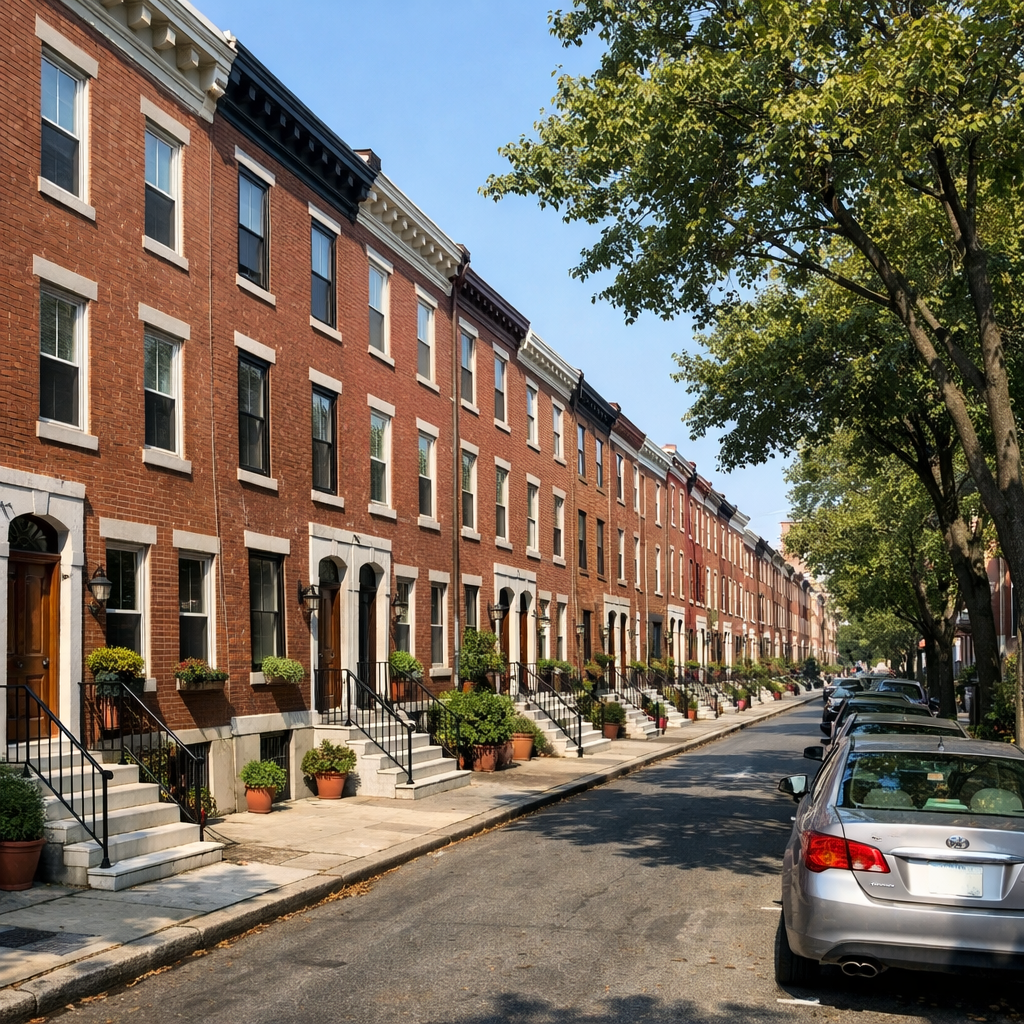
Short answer: A Philadelphia rowhome’s value comes mostly from its block and neighborhood, its size and layout, and its condition and updates — measured against recent closed sales of similar homes nearby. Features like a finished basement, a roof deck, or parking can matter, but how much depends on what buyers in that neighborhood actually pay for them. Permits matter too: an appraiser has to note additions done without required permits and comment on their quality and effect on value.
Why does the block matter so much for a rowhome?
Because rowhome values can shift from one block to the next. Two homes that look alike can sell differently because of the street itself — how well kept the block is, how close it is to a park, transit, or a commercial corridor, and what’s been selling there.
That’s why appraisers start as close to home as possible. Fannie Mae’s guidelines say sales from within the same neighborhood are the best indicator of value, because they reflect the same location pluses and minuses (Fannie Mae Selling Guide, B4-1.3-08). In places like Fishtown, Northern Liberties, Graduate Hospital, Passyunk, Fairmount, Manayunk, Port Richmond, or Mayfair, the best comparables are usually on the same or nearby blocks, in the same style.
Does a twin compare to a rowhome?
Not as a first choice. A twin (semi-detached) and a rowhome (attached on both sides) appeal to buyers differently — a twin has an end wall, more windows, and sometimes a side yard. Fannie Mae asks appraisers to pick comparables with similar style, size, room count, site, and condition. If there aren’t enough true matches nearby, the appraiser can widen the search but has to explain why and adjust for the differences.
End-of-row homes fall in between, and the appraiser weighs them the same way: against the sales buyers in that neighborhood would actually compare them to.
How is a rowhome measured?
For appraisals on loans sold to Fannie Mae, appraisers measure square footage using the ANSI Z765-2021 standard, and Fannie Mae specifically says the standard applies to rowhouses (Fannie Mae Selling Guide, B4-1.3-05). That matters in older Philadelphia homes, where a third-floor room with a low, sloped ceiling or a room reached only through an unfinished area may be reported separately instead of counted as regular living area.
Does a finished basement count as living space?
Not in the above-grade square footage. Fannie Mae treats any level that is partly below ground as below grade — no matter how nice the finish — and appraisers report it on its own line. That doesn’t mean it’s worthless. Fannie Mae notes that finished below-grade rooms can add substantially to value, especially when the finish quality is high. The appraiser looks at what comparable homes with and without finished basements sold for.
Do roof decks, parking, and updates add value?
They can, but there’s no set dollar amount. The appraiser looks for closed sales that show what buyers in that neighborhood pay for each feature:
- Roof decks are popular in many city neighborhoods. In Philadelphia, a roof deck isn’t eligible for the City’s simple “EZ” deck permit, which excludes roof decks and decks above the first floor (City of Philadelphia, EZ permits). Be ready to show that yours was permitted.
- Parking — a garage, driveway, or rear parking pad — can stand out on blocks where most owners park on the street.
- Kitchens, baths, and systems — a recently renovated kitchen or bath, newer roof, windows, heating, or electrical — show up in the condition rating and in how the home compares to the sales.
Why do permits matter for renovations and additions?
The City of Philadelphia requires a building permit for work that enlarges or adds to a structure or changes its interior or exterior, with exceptions for things like routine maintenance and some interior finish work (City of Philadelphia, Get a Building Permit). If an appraiser finds an addition without a required permit, Fannie Mae requires them to comment on the quality and appearance of the work and its effect, if any, on market value.
You can look up permit, zoning, and inspection history for any Philadelphia address on the City’s Atlas tool (how to search property history), and see the property’s assessment record at property.phila.gov. If your home is on the Philadelphia Register of Historic Places, exterior changes — including facades, windows, doors, roofs, and decks — also need Philadelphia Historical Commission approval.
What can I do to help the appraisal go smoothly?
- Have a list of updates with dates, and receipts if you have them.
- Gather permits and final approvals for additions, roof decks, and major renovations.
- Point out features that aren’t obvious, like a new roof, a replaced sewer line, or newer HVAC.
- Make sure the appraiser can get into every level, including the basement and roof access.
H.M. Hoffman & Company is an independent appraisal firm. We appraise homes; we don’t sell or rent them.
FAQ
Will my rowhome be compared to homes in other neighborhoods?
Only if there aren’t enough good comparables close by. Fannie Mae wants sales from the same neighborhood when possible; if the appraiser uses sales from a competing area, the report has to explain why and account for the differences.
Does my finished basement count toward square footage?
Not toward above-grade living area. It’s reported separately, but a well-finished basement can still add value.
Will an unpermitted roof deck or addition hurt my appraisal?
It can complicate it. The appraiser has to note the missing permit and comment on the quality of the work and any effect on value. Your lender may have its own requirements, so it’s smart to check your permit history on Atlas before you sell or refinance.
Is the City’s assessment the same as my appraised value?
No. The assessment is set by the City for tax purposes. An appraisal is an independent opinion of market value based on recent closed sales.
Do online estimates account for my block?
Not always. Automated estimates can miss block-by-block differences and interior updates. An appraiser inspects the home and picks the sales that fit it best.
Need a rowhome appraisal in Philadelphia, Montgomery, Delaware, or Chester County?
Jesse M. Hoffman is a PA Certified Residential appraiser, license RL003691, and a licensed FHA appraiser. Whether you’re pricing a rowhome before listing, checking value before you buy, or removing PMI, see our residential appraisal services, order online, or call (610) 639-3554.